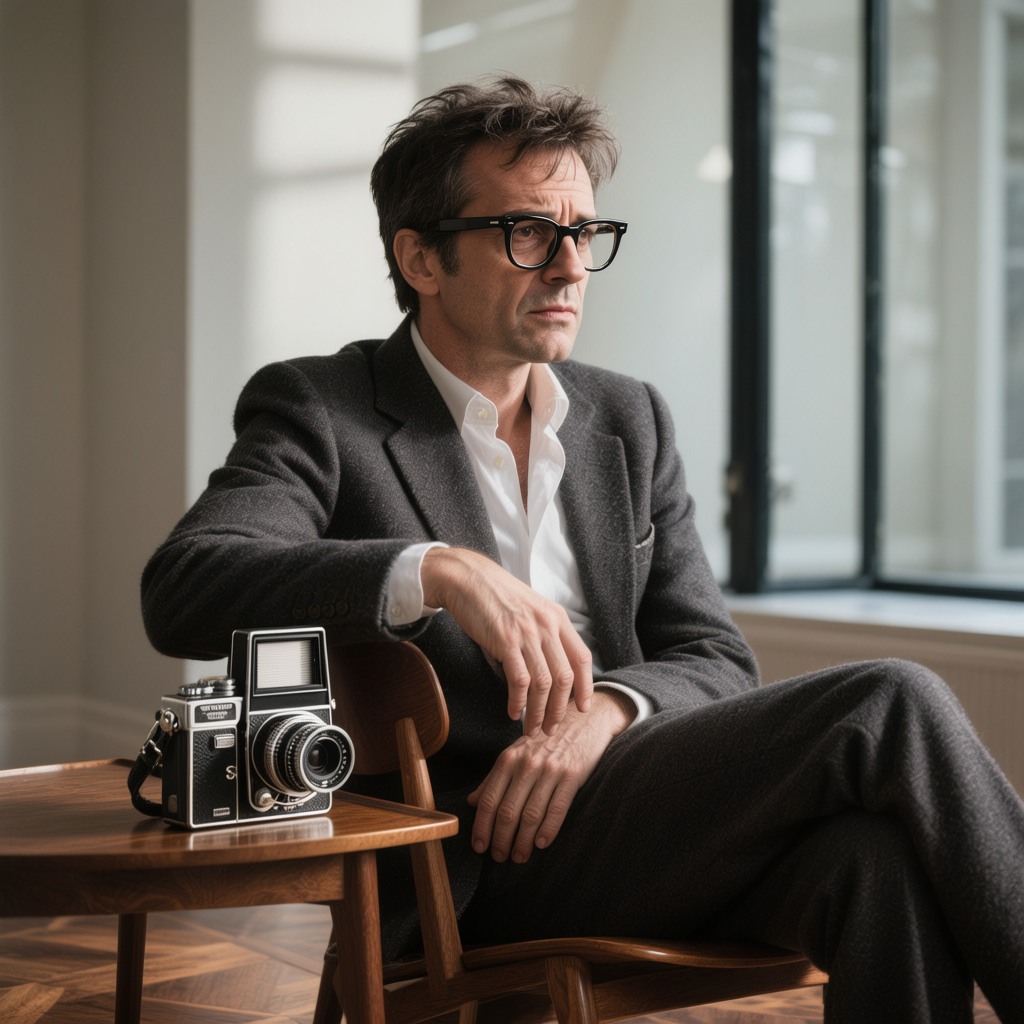
Who’s Guillaume Marbeck? Well, he’s one of those actors who just pops up everywhere. His work stretches across Europe and beyond, and he’s done a bit of everything—stage, film, you name it. Even though he’s only recently started to catch the eye of a wider audience, Marbeck’s already pulled off some pretty impressive roles. He’s the kind of actor who keeps surprising people, always bringing something fresh and genuine to the screen.

Early Career and Previous Roles
Before he landed his breakthrough as Jean-Luc Godard, Marbeck spent years carving out a place for himself in European cinema. He picked roles that pushed him, gravitating toward complicated, demanding characters instead of the usual leading-man types. You could see he cared more about substance than box office numbers. Every part he took on made it clear: he was in it for the art, not just the fame.
International Recognition and Festival Circuit
Then came the big film festivals—Toronto, Cannes, you name it. Marbeck started showing up on those red carpets with top directors and celebrated actors. That’s when people really started to notice him. His festival appearances didn’t just boost his profile; they made it obvious he was ready for the big leagues, someone who could handle serious, high-profile projects.
The Role That Changed Everything: Godard in Nouvelle Vague
But the real turning point? Playing Jean-Luc Godard in Richard Linklater’s "Nouvelle Vague." This wasn’t just another job. It was one of those rare performances that shifts an actor’s whole trajectory. Suddenly, Marbeck wasn’t just a promising newcomer—he was a major artist.
Understanding Jean-Luc Godard: The Man Behind the Icon
To really get what Marbeck pulled off, you have to know a bit about Godard himself. Jean-Luc Godard (1930–2014) wasn’t just any filmmaker—he changed the rules of cinema. His work rewrote what movies could be, both in style and in spirit. Playing someone that influential isn’t easy, but Marbeck managed to capture the essence of a true legend.

Godard didn’t just show up in French cinema—he shook it up. In the late ’50s and ’60s, he stood at the heart of the French New Wave, a group of filmmakers who tossed out the old rules. Forget tidy scripts and neat plots. Godard and his peers leaned into wild experiments, improvised scenes, tangled timelines, and ideas that made you stop and think.
That electric moment in 1959 Paris—Linklater’s movie goes right there. Suddenly, you’ve got these young directors, full of guts and ambition, convinced they could turn cinema upside down, even if they barely had any money or experience.
Then came “À bout de souffle” (“Breathless”) in 1960. Godard’s first feature didn’t just make a splash—it blew open what movies could be. Fast cuts, stories that zig when you expect them to zag, and a wink at the audience that said, “Yeah, we know you’re watching.” It set a new bar for filmmakers everywhere.
But Godard wasn’t just a director. He was a thinker, a troublemaker, and a guy who liked to challenge everyone—audiences, critics, even his own crew. His movies poked at big questions about life, love, morality, and what movies are even for. He demanded a lot, both artistically and intellectually, and he didn’t care much about playing nice or making things easy for anyone.
Honestly, working with him could be tough. He was stubborn, blunt, and not afraid to ruffle feathers. He stuck to his vision, no matter what, and wouldn’t water it down to please the mainstream. To really capture Godard on screen, you need an actor who can match that sharp mind and that uncompromising energy.
Now, Linklater’s “Nouvelle Vague”—that’s a story in itself. He announced the project thirteen years before its planned release in 2025. Thirteen years! That’s serious dedication. Linklater pushed forward, year after year, determined to bring that wild, creative spark of 1959 Paris back to life, no matter how long it took or how tough things got. You can feel that commitment in every frame.

The Unprecedented Technical Challenge
Linklater had a real puzzle to solve: how do you bring Paris of 1959 back to life in 2024 or 2025, and still keep that raw, spontaneous energy the old French New Wave films had? Those movies were basically made on a shoestring — no big art departments, no extra money, barely any technical support.
Back then, Godard and the rest shot on the fly. Hand-held cameras, whatever light was around, tiny crews. Forget about fancy costumes or big set builds — they just didn’t have the money. Linklater, though, has to balance two worlds: he needs to capture that original spirit, but he also has to meet today’s movie standards. The audience expects a certain polish now, even when a film tries to look raw.
Recreating Period Authenticity Across 65 Years
Turning today’s Paris into the city it was in 1959? That’s no small feat. Linklater talked about this in interviews — just about everything on the street has changed, and the team had to hunt down and fix all sorts of details that would feel out of place in the late ‘50s. It’s a massive job, honestly.
- Street
furniture and modern additions that didn't exist in 1959,
including the iconic metal bollards ("sticks") that now line
Parisian streets
- Commercial
modernization that completely altered the visual appearance of
storefronts and public spaces
- Asphalt
paving that replaced the original cobblestone streets where key
scenes needed to be shot
- Visual
effects requirements to erase contemporary elements and restore
historical accuracy
- Costume
and prop authenticity requiring meticulous attention to
period-appropriate details
Shooting in Black and White—and in French
Linklater took a big swing with “Nouvelle Vague.” He shot the whole thing in black and white, just like the original French New Wave films. A lot of scenes are in French, too, which isn’t even Linklater’s first language.
None of this made life easy for the crew. But instead of getting frustrated, Linklater saw the creative hurdles as a chance to try something new. He leaned on his years of experience to steer through it all. “Everything was a challenge,” he said, “but I think I’m experienced enough that I saw it as an opportunity. I wasn’t really afraid of anything.”
Guillaume Marbeck’s Preparation: Becoming Godard
Getting ready to play Jean-Luc Godard wasn’t simple for Marbeck. He had to dive deep—really get to know Godard’s philosophy, his creative quirks, and all those little things that made him unique.

Digging In and Living the Role
Marbeck didn’t just study Godard—he kind of lived in his head for a while. He went way beyond just copying his mannerisms. He tried to get under Godard’s skin: how he thought, what shaped his ideas, and what it felt like to be a bold, restless filmmaker at that wild, revolutionary moment in history.
It wasn’t enough to nail Godard’s walk or his accent. Marbeck had to figure out why Godard made certain choices—what pushed him to break the rules, what fired him up to take on the whole film industry. That kind of insight only comes from obsessing over Godard’s movies, his essays, and the whole French New Wave scene.
Nailing the "Unearned Swagger"
Linklater, the director, put it best. He said Marbeck brought “the swagger, the unearned swagger of the confidence of the first time director” to the part. That’s really the heart of it. Godard, back then, was this young guy—he hadn’t made any of his big films yet, but he walked around like he’d already changed cinema forever. He was sure of himself without really having proved anything.
That’s what Marbeck had to capture: the mix of raw, youthful confidence and real artistic depth. It’s not easy to pull off, but he managed to show both the swagger and the brains that made Godard so magnetic.
Voice and Physicality
Marbeck didn’t just have to think and feel like Godard—he had to sound and move like him, too. The director wanted him to really nail Godard’s presence, from the way he walked and talked to those little habits that made Godard stand out.
In interviews, Marbeck talked a lot about digging into Godard’s voice. He focused on getting the French accent and those unique rhythms just right. He wanted people to hear Godard, not just see an imitation. That kind of dedication showed how deep he went with the role.
Learning the Godardian Approach to Filmmaking
One part of Marbeck’s prep was especially interesting: figuring out how Godard actually worked on set. Linklater encouraged everyone to get what was going on behind the scenes, not just follow directions.
Marbeck discovered that Godard mixed things up—he didn’t always shoot closeups and wide shots on the same day, and he avoided strict planning. He leaned into improvisation and kept things loose. Once Marbeck understood how Godard directed, he could step into his shoes more naturally, knowing both what he did and why he did it.
The Collaborative Creative Process on Set
Working with Richard Linklater felt different. Instead of calling all the shots himself, Linklater opened things up to the whole team. He wanted everyone’s ideas, not just his own. People really felt part of the process, not just along for the ride.

Democratic Filmmaking Philosophy
Marbeck and the rest of the cast and crew talk about how Linklater made everyone feel welcome on set—like he was inviting all of them into his film. No matter your role, you could share your thoughts on a scene, a character, or even just a single moment. People felt heard, and that sense of ownership ran through the whole team.
Marbeck put it simply: “Every part of this movie was invited to his movie, and we were allowed to offer our views on a scene or a character or a moment or a phrase. And I think this participated to make us feel that we were in charge too.” That democratic spirit made everyone want the film to succeed because it felt like theirs.
The Rehearsal Process and Preparation
Before shooting started, Linklater ran long, detailed rehearsals. He wanted everyone—cast and crew—to get under the skin of the characters, the history, the overall vision. Marbeck dove in headfirst, calling this phase “the period during which I learned everything.”
These rehearsals mattered because the whole thing was new territory. Not just for the actors, but for everyone on set. Shooting in black and white, working in French, hunting for locations that felt true to the era (but still had to deal with modern distractions), and trying to channel the energy of the French New Wave—it all demanded that everyone be on the same page.
The Challenge of Improvisation Within Structure
Linklater didn’t stick to the old French New Wave routine of one take per shot. Instead, he shot multiple takes every time. The film needed it—between the complicated visual effects and the period details, there was a lot to juggle. But Linklater also wanted to give his actors the best shot at nailing their performances.
So Marbeck and the others had to walk a tightrope. They had to keep their energy and timing alive across take after take, but still make room for the kind of improvisation and surprise that Godard’s original films thrived on. It was all about striking that balance—being prepared, but still ready for real moments of discovery.
The Personal Challenge of Playing an Icon
Taking on a legendary figure isn’t just about acting; it gets into your head. Marbeck had to shoulder the weight of playing someone who means a lot to people—someone with a legacy and a crowd of dedicated fans who have their own strong ideas about who he was. That kind of role comes with its own set of challenges, both creative and personal.

Living Up to Godard’s Legacy
Marbeck knew everyone would be watching—film scholars, hardcore Godard fans, French New Wave enthusiasts, and people who just wandered into the theater. He felt the pressure. If he got Godard wrong, even a little, critics would pounce. Fans would grumble. The whole film might lose its spark.
The Pressure of Physical and Vocal Resemblance
It wasn’t just about getting the attitude right. Godard’s look, his voice, his odd little gestures—people have seen all of it, frame by frame, for decades. Marbeck had to nail the specifics. At the same time, he couldn’t just do an impression; the performance needed life, not just accuracy. That push and pull—being true to the real Godard, but also making him feel new—kept things tense.
Making Godard Human
Linklater made it clear from the start: he wanted to pull back the curtain, to show “the man behind the icon.” That’s what Marbeck had to do—give us a Godard who isn’t just a radical filmmaker, but a young guy with dreams, doubts, and quirks. Not some distant legend, but a real, flawed person.
So Marbeck dug in. He tried to find the person inside the myth, to show Godard’s brilliance and his rough edges, too. The goal wasn’t to put him on a pedestal. It was to make him human.
The Film’s Reception and Critical Recognition
By late 2025, “Nouvelle Vague” really made waves with critics and at film festivals. It premiered at some of the biggest festivals on the circuit, sparking a lot of conversation—not just about how it looks and sounds, but about how true it feels to its era and how strong the acting is.
Festival Recognition
The film showed up at major international festivals, including Toronto. Guillaume Marbeck, who plays Godard, took part in interviews and public events, putting the film front and center for both audiences and critics worldwide. That premiere in Toronto? It gave the whole team a real shot at international attention.
Critical Appreciation for Marbeck’s Performance
Critics haven’t held back when it comes to Marbeck. They’ve singled out his version of Jean-Luc Godard, saying he nails both the sharp mind and the youthful energy that made Godard famous. People keep calling his performance transformative—he’s one of the main reasons the film hits so hard.
Conclusion: Guillaume Marbeck and the Legacy of Nouvelle Vague
Marbeck’s turn as Godard in Richard Linklater’s “Nouvelle Vague” feels like a huge moment for him. He doesn’t just imitate Godard—he gets under the surface, combining smarts, physicality, and real emotion. It’s a reminder of what serious acting can do in modern film.
The film itself pulls off something special. It blends today’s technology with real artistic vision and a clear respect for history. The result? A living, breathing snapshot of a turning point in cinema. And right at the center is Marbeck, showing off his range and his guts as an actor willing to go deep and take risks.
As more people watch “Nouvelle Vague” and get to know Marbeck’s take on Godard, his reputation just keeps climbing. He’s not just another actor—he’s someone who chases complex roles, throws himself into every part, and works well with the people around him. If this film is any sign, Marbeck’s going to be one of the standout performers of his generation, and he’ll keep shaping international cinema in the years ahead.
Comments
Leave a Comment
No comments yet. Be the first to share your thoughts!