The Election Commission of India just released the draft electoral roll for West Bengal’s 2026 elections. That’s a big step in the Special Intensive Revision—SIR, if you want the shorthand. If you’re wondering what all this means, you’re in the right place. Here’s a clear look at what’s in the draft voters list, some important stats, why some names get deleted, and what you need to do if your name’s missing or needs fixing.
SIR is honestly one of the biggest voter list clean-ups India does. The whole idea is to make sure every eligible voter gets on the list, and to weed out any duplicates or mistakes.
So, what’s this Special Intensive Revision all about? The SIR is a massive update of the voter roll, run by the Election Commission of India. It’s backed by Article 324 of the Constitution and Section 21 of the Representation of the People Act, 1950. The main goal? Include every eligible citizen, keep the list accurate, and remove anyone who shouldn’t be there.

- Ensure
all eligible Indian citizens are included in the
electoral roll
- Remove ineligible
voters from the voter list
- Eliminate duplicate
entries and fraudulent registrations
- Update
voter information with current residential addresses
- Maintain
the integrity and accuracy of the electoral process
- Facilitate
transparent and fair elections
Let’s back up a bit. India’s revised its electoral rolls 13 times since independence. The list goes from the early 1950s, then 1957, 1961, ’65, ’66, then a jump to the ’80s, and so on—1983-84, 1987-89, 1992, 1993, 1995, 2002, 2003, and 2004. But this SIR for 2025-26? It’s the biggest, most tech-driven update yet.
Now, about West Bengal. In the first phase of the SIR, the state saw record numbers of voters included and a level of digitization that’s never happened before.
- Total
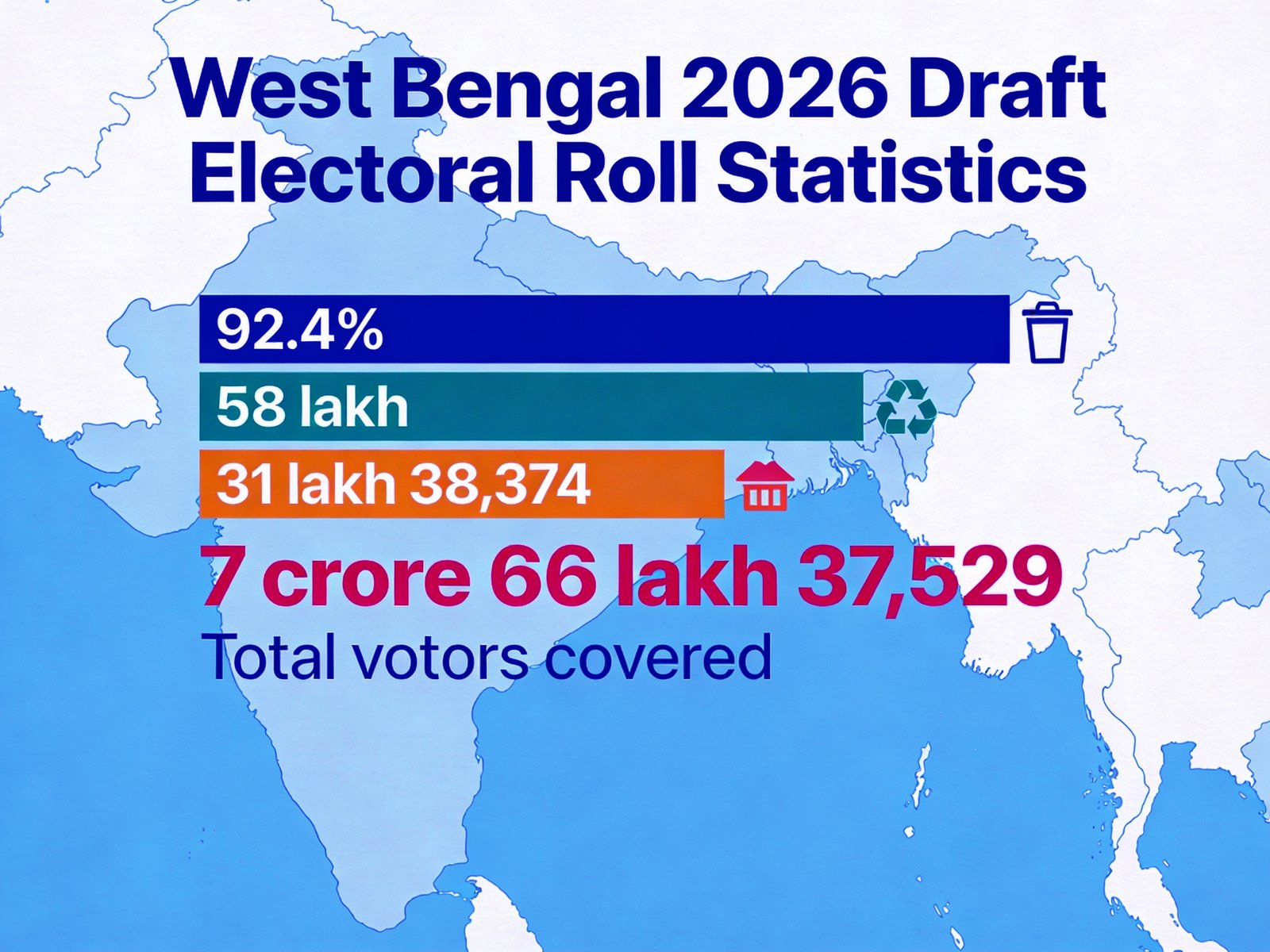
voters covered: 7 crore 66 lakh 37 thousand 529 (76,637,529)
- Enumeration
Forms digitized: 7 crore 8 lakh 16 thousand 616 (70,816,616)
- Digitization
percentage: 92.4% of all enumeration forms processed
- Expected
final publication date: February 14, 2026

Voter Deletion Analysis
With the SIR process, they found and removed a huge chunk of entries that just didn’t fit the rules for voter eligibility.
Here’s a look at the types of voters they deleted (58 lakh+ deletions):
- Absent
voters: Citizens who could not be located at their registered
addresses
- Shifted
voters: Individuals who have moved to different constituencies or
states
- Deceased
voters: Entries of citizens who have passed away
- Duplicate
voters: Multiple registrations under the same person's name
Pending cases requiring verification:
- Unmapped
voters: 31 lakh 38 thousand 374 voters not matched with the 2025
electoral roll
- Hearing
period: January 14, 2026 to February 7, 2026
- Status: These
voters will be called for official hearings to verify eligibility and
update their information

Where to Find the West Bengal Draft Electoral Roll 2026
You’ve got options if you want to check whether your name’s on the draft electoral roll in West Bengal. There are plenty of easy ways to do it:
Online platforms:
- voters.eci.gov.in -
Official Election Commission voter portal with search functionality
- ECINET
mobile application - Dedicated app for voter information access
- CEO
West Bengal website - State-level election commission website
- District
websites - Direct access through respective district portals
Offline Locations:
- Election
Commission offices - Regional ECI headquarters
- Block
Development Officer (BDO) offices - Local administrative centers
- Sub-Divisional
Officer (SDO) offices - Regional government offices
- District
Magistrate (DM) offices - District administrative headquarters
- Local
government offices - Gram panchayat and municipal corporation
offices

How to Register or Fix Your Name: The Form 6 Process
Who Needs to Fill Out Form 6?
Form 6 is the standard form for voter registration and is meant for:
- First-time
voters registering for the first time
- Missing
names not appearing in the draft electoral roll
- Address
updates for voters who have relocated
- Name
corrections for spelling errors or variations
- Family
member additions for eligible household members
Step-by-Step Online Form 6 Registration Process
Steps to apply online through voters.eci.gov.in:
- Visit
the National Voters Service Portal
- Navigate
to www.voters.eci.gov.in
- Locate
the voter registration section
- Create
Your Account
- Click
on "Sign-up" or create a new account
- Enter
your mobile number and email address
- Verify
through OTP (One-Time Password)
- Select
Form 6 Option
- Log
in to your registered account
- Click
on "Forms" section
- Select
"Fill Form 6" button
- Fill
in Personal Information
- State,
District, and Parliamentary Constituency
- Full
name and gender
- Date
of birth
- Guardian
or family member details
- Residential
address with postal details
- Upload
Required Documents
- Passport-sized
photograph (digital copy)
- Identity
proof (Aadhaar, Passport, or Driving License)
- Address
proof (Ration card, utility bill, or lease agreement)
- Date
of birth document (Birth certificate or school mark sheet)
- Submit
Application
- Review
all entered information
- Click
"Preview and Submit"
- Receive
acknowledgment number for tracking
- Track
Application Status
- Use
acknowledgment number on voters.eci.gov.in
- Check
status through ECINET app
- Receive
SMS/email updates on application progress
Average processing time: 30-45 days from submission

Offline Form 6 Registration Method
For citizens preferring offline submission:
- Download
Form 6 from www.voters.eci.gov.in
- Print
the form in A4 size
- Fill
all required fields clearly in English or regional language
- Attach
supporting documents:
- Photocopy
of identity proof
- Photocopy
of address proof
- Photograph
(2 copies, signed on the back)
- Submit
to:
- Your
local Booth Level Officer (BLO)
- Block
Development Officer office
- Any
Election Commission office
Submission deadline: Claims and objections
period extends until February 7, 2026
Documents Required for Form 6 Registration
Identity Proof (select one):
- Aadhaar
card
- Passport
- Driving
license
- PAN
card
- High
school mark sheet
Address Proof (select one):
- Ration
card
- Utility
bill (electricity or phone)
- Lease
agreement or rental document
- Bank
passbook
- Employer
certificate with address
Date of Birth Proof (select one):
- Birth
certificate
- School/College
mark sheet
- Passport
- Aadhaar
card
With the ECINET app, you get a bunch of helpful voter services right on your phone.
Here’s what you can do:
- Voter
search - Locate your name in electoral rolls
- Form
download - Access all voter registration forms
- Form
6 filing - Submit voter registration directly through app
- Application
tracking - Monitor Form 6 application status
- BLO
booking - Schedule appointments with Booth Level Officers
- Toll-free
helpline - Connect with election officials at 1950 + STD code
- Constituency
finder - Identify your assembly and parliamentary constituencies
- Polling
booth locator - Find your designated polling station

Accessing the ECINET App
Download and Installation:
- Available
on Google Play Store (Android)
- Available
on Apple App Store (iOS)
- Search
for "ECINET" or "Voter Services"
- Free
download with no subscription required
Getting Help Through ECINET:
- Use
"Book-a-call with BLO" feature for direct officer contact
- Schedule
callbacks at convenient times
- Access
frequently asked questions (FAQs)
- Receive
instant notifications on application status
Timeline: Important Dates for West Bengal Voters
SIR Phase-II Timeline for West Bengal
|
Event |
Date |
Duration |
|
Enumeration Period Start |
November 4, 2025 |
- |
|
Enumeration Period End |
December 4, 2025 |
1 month |
|
Draft Electoral Roll Publication |
December 15, 2025 |
- |
|
Claims and Objections Period |
December 15, 2025 - January 31, 2026 |
7+ weeks |
|
Hearing Period (Unmapped Voters) |
January 14 - February 7, 2026 |
3+ weeks |
|
Final Electoral Roll Publication |
February 14, 2026 |
- |
All dates are fixed by the Election Commission and are
strictly adhered to ensure electoral readiness.
Reasons for Voter Deletion from Electoral Roll
The deletion of voter names is not arbitrary but follows
strict Election Commission criteria and legal procedures:
Category 1: Deceased Voters
- Voters
who have passed away since the last electoral roll revision
- Names
verified through municipal records and public notices
- Deletions
require documentary evidence or family confirmation
- Protects
electoral integrity and prevents fraudulent voting
Category 2: Shifted Voters
- Voters
who have relocated to different constituencies
- Those
who moved to other states or union territories
- Voters
who no longer have permanent residence at registered address
- Individuals
who have shifted abroad for extended periods
- May
re-register in their new constituency using Form 6
Category 3: Absent Voters
- Voters
not found during enumeration despite multiple attempts by Booth Level
Officers
- Addresses
where no family member is present during survey period
- Residences
that are locked or unoccupied for extended periods
- Can
claim inclusion through Form 6 if still eligible
Category 4: Duplicate Entries
- Multiple
registrations under the same person's name
- Entries
with identical fingerprints or biometric data
- Voters
registered in more than one constituency
- Prevents
potential double voting and electoral fraud
- Only
one authentic entry is retained

How to Appeal Deletions and File Claims
Think your name got left off the list by mistake? Or maybe you want to challenge the removal of someone else’s name? Here’s how you do it—there’s a set window for claims and objections.
You can file from December 15, 2025, to January 31, 2026. The commission gives at least a week’s notice before the window opens, so you’ll have time to get ready. There’s also a special hearing period, from January 14 to February 7, 2026, for voters whose addresses haven’t been mapped yet.
How to File a Claim (If Your Name Is Missing)
- Gather
supporting documents
- Address
proof showing current residence
- Identity
proof
- Any
previous voter identification documents
- Complete
Form 6
- Fill
out comprehensively with accurate information
- Attach
all relevant documents
- Obtain
photograph attested by authorized person
- Submit
through preferred channel
- Online
at voters.eci.gov.in (preferred and fastest)
- To
local Booth Level Officer
- At
block or district election office
- Via
ECINET mobile application
- Obtain
acknowledgment
- Save
digital confirmation number (online)
- Get
receipt stamp (offline submission)
- Note
reference number for tracking
Filing an Objection (Against Another Voter's Inclusion)
If you wish to challenge someone's continued inclusion in
the electoral roll:
- Identify
the voter in question
- Document
reasons for objection (with supporting evidence)
- Complete
objection form with details
- Submit
with evidence to election office
- Attend
hearing if called for verification
- Await
decision from electoral officer
Impact on 2026 West Bengal Elections
Electoral Significance of Updated Voter List
The finalized electoral roll on February 14, 2026, will
serve as the:
- Definitive
voter list for all West Bengal elections in 2026
- Basis
for constituency delimitation and seat allocation
- Reference
document for election commission operations
- Public
record for electoral transparency and accountability
Voter Participation and Democratic Process
An accurate and comprehensive electoral roll ensures:
- Maximum
voter participation from eligible citizens
- Prevention
of electoral fraud through duplicate or ineligible voting
- Democratic
legitimacy for election outcomes
- Equal
representation for all constituencies
- Transparent
governance following constitutional procedures
Frequently Asked Questions (FAQs)
Q1: Can I check if my name is in the draft electoral
roll?
A: Yes, visit www.voters.eci.gov.in,
click the search option, enter your name and district to verify your voter
status.
Q2: What should I do if my name is not in the draft list?
A: File Form 6 online or offline before January 31, 2026. Attach supporting
documents and await processing within 30-45 days.
Q3: How much does Form 6 cost?
A: Form 6 filing is completely free. There are no charges for online or offline
voter registration in India.
Q4: Can I file Form 6 on behalf of my family member?
A: No, each voter must submit Form 6 with their own signature. You can help
them fill the form, but their consent is mandatory.
Q5: What if I don't have Aadhaar card?
A: Aadhaar is not mandatory. You can provide any other identity proof like
passport, driving license, or PAN card.
Q6: Is there an age limit for voter registration?
A: No age limit exists once you reach 18 years. You can register and vote until
any disqualifying event occurs.
Q7: Can I download my voter ID from the website?
A: Yes, after your Form 6 is processed, you can download your voter ID from
voters.eci.gov.in.
Q8: What is the toll-free helpline number for voter
queries?
A: Call 1950 followed by your state STD code (e.g., 1950 + 33 for West Bengal)
for free assistance.
Conclusion: Your Role in India's Democratic Process

As a citizen of West Bengal, your responsibility is to:
- Verify
your voter status in the draft list
- File
Form 6 promptly if your name is missing
- Provide
accurate information during the revision process
- Participate
actively in the democratic process
Got questions? Want updates or more details? Head to www.voters.eci.gov.in or grab the ECINET app. Everything you need is right there.
- National
Voters Service Portal: www.voters.eci.gov.in
- Election
Commission of India: www.eci.gov.in
- CEO
West Bengal: www.ceowestbengal.co.in
- ECINET
Mobile App: Available on Google Play and Apple App Store
- Toll-free
Helpline: 1950 + STD code
Last updated: December 16, 2025
Comments
Leave a Comment
No comments yet. Be the first to share your thoughts!